By Kyra Intelligence
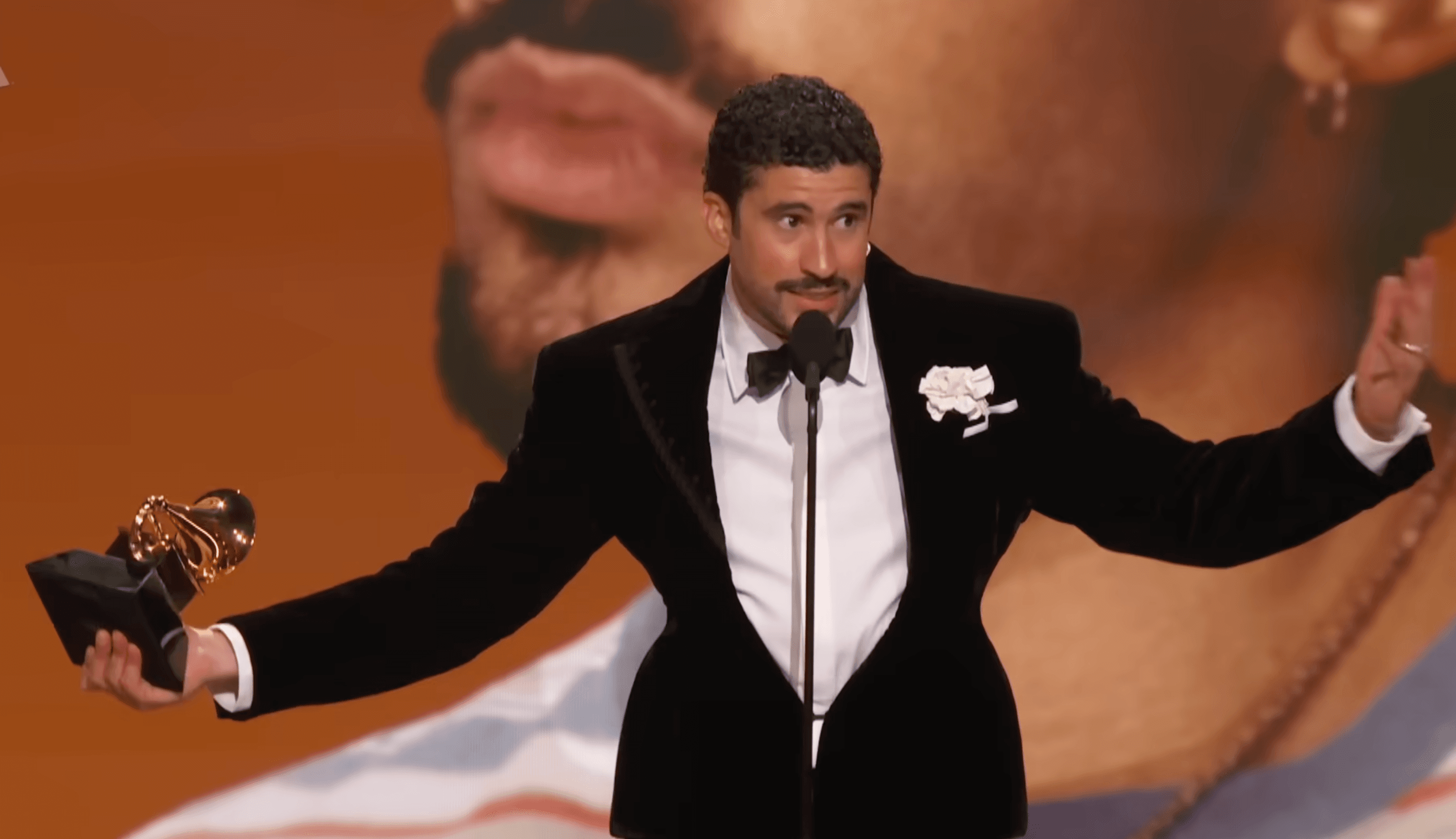
The morning after the Grammys has a particular kind of hangover. Not the champagne headache, the narrative one. By lunchtime, the industry has already decided what last night “meant.” Who “had a moment.” Who “owned the room.” Who’s “back.”
But awards shows don’t crown culture in real time. They coronate what’s already been quietly decided elsewhere.
This year’s big story wasn’t just who won. It was how predictably the winners behaved in the months before they won if you were watching the right place.
According to the official results, Bad Bunny took Album of the Year, Billie Eilish won Song of the Year, Kendrick Lamar (with SZA) won Record of the Year, and Olivia Dean won Best New Artist at the 2026 Grammy Awards.
Meanwhile, in the parallel universe where culture is actually built (TikTok) the signature of these wins was already visible: not in label spending, not in celebrity cosigns, not in the obvious stuff.
In the less glamorous, more decisive mechanics of repetition.
If you take Kyra’s analysis at face value, Grammy winners in 2026 share a blunt trait: they weren’t manufactured by campaigns. They were grown by density.
Across 2B+ analysed TikTok videos (January 2025–January 2026), winners showed:

That isn’t “viral.” Viral is a flare: bright, brief, forgettable.This is something else: a build. A loop. A habit.
It’s infrastructure.
And it looks boring right up until it’s inevitable.
Let’s name the misconception early: “organic” is not the same as “random.”
Kyra’s data suggests that for major winners, creators didn’t just watch they participated at scale, and they did it without being told.
Here’s the creator-first footprint Kyra found:
Those small-creator percentages matter more than the vanity totals, because they reveal what actually carried the signal.
It wasn’t a few big accounts broadcasting taste rather it was thousands of normal accounts repeating it.
There’s a comforting fantasy in marketing that cultural traction is something you “buy” by hiring the right megastar at the right moment. The data is fairly rude about this.
Kyra’s median creator size for three of the biggest names:
These are not celebrities. They’re not even “influencers” in the way most decks mean it. They’re the people your strategy often ignores because they’re inconvenient: too many, too distributed, too hard to brief, too hard to manage with spreadsheets and vibes.
And yet: they’re the ones who build the runway the Grammys land on.
This is the bit brands should sit with: if the most consequential cultural outcomes are being driven by the median creator — then the job is not “find one big partner.”
The job is to seed density.
One of the sharpest signals in your data is reuse: posts per creator.
Kyra found:
This is the difference between attention and attachment.
A creator posting once is curiosity. A creator posting three times is allegiance.
In plain terms: culture becomes predictable when people start repeating themselves.
This is where most influencer reporting fails brands. Because the easy metric is views — and views don’t distinguish between a glance and a return.
Kyra’s logic is more uncomfortable, but more useful: track what creators do twice.
Now, the most interesting contradiction: Olivia Dean winning Best New Artist with smaller raw numbers next to Doechii.
Kyra’s Best New Artist comparison:
If you run the world on volume alone, you’d place a bet and move on. But awards — especially categories like Best New Artist — have always been about something fuzzier: felt momentum. The sense of an artist arriving with gravity rather than noise.
Kyra’s interpretation is a practical one: Olivia’s story looks like stable adoption less explosive, more consistent. Less “moment,” more “presence.”
Big numbers impress dashboards.Stable behaviour wins categories.
Two maps in your data make the point that cultural momentum is geographic.
For Bad Bunny, the expansion pattern reads like identity:
US → Spain → Venezuela → Puerto Rico → Mexico → then outward into Europe.
For Kendrick Lamar, the gravity sits in English-speaking markets first, then crosses:
US dominance → UK → Germany/France → wider.
This matters for brands because it turns “global” from a budget line into an adoption order. Launches don’t spread evenly. They radiate. They inherit diaspora routes, language routes, subculture routes.
And if you can see those routes early, you can seed smarter.
Then there’s the part marketers love to ignore because it ruins clean narratives: engagement doesn’t track neatly with scale.
Kyra’s median engagement rate snapshot:
That’s not a diss on anyone. It’s a description of two different kinds of cultural power:
The Grammys often reward both but brands rarely plan for both. Most media plans are built for scale and then surprised when they don’t get meaning.
Kyra’s proposition is that embed is measurable and therefore seedable.
The Q1 2025 “before the push” table is the closest thing you have to a smoking gun:
The implication is simple and a bit brutal: creators were already doing the work before budgets arrived.
Which raises the question brands don’t like asking out loud:
If culture is already moving, why are we still planning as if we start it?
But Kyra’s USP isn’t “we have data.” Everyone has data. Kyra’s USP is what the system can do with it:
This is why the “operating system” line works. Sure it sounds sounds futuristic but it matters because it describes a workflow shift:
From buying attention to building repeat behaviour.
From spikes to stability.
From outcomes to formation.
If the 2026 Grammys tell us anything useful (beyond who had the best outfit), it’s this:
The culture engine is no longer top-down. It’s loop-based.
Creators don’t amplify what brands announce. They rehearse what they believe. Over and over. Until it becomes real.
The winners last night weren’t the ones with the loudest push. They were the ones with the most people coming back.
And that’s the quiet provocation in Kyra’s data:
Influence It accumulates rather than surge.
Awards confirm the outcome. Creators create the signal.
Kyra’s bet is simple: the signal is legible early if you’re built to see it.
The Grammys aren’t decided by charts or social traction. They’re awarded through industry voting, a peer-led system that rewards work once it has settled into collective judgement. That makes them a signal of durability, not virality. The same distinction underpins Kyra’s predictive index. Rather than measuring what spiked, we track what stabilises and compounds over time. Social traction can create visibility, but it’s repetition and consensus that determine what lasts.
Subscribe to our newsletter for weekly influencer marketing insights, trends, and data-driven strategies.
